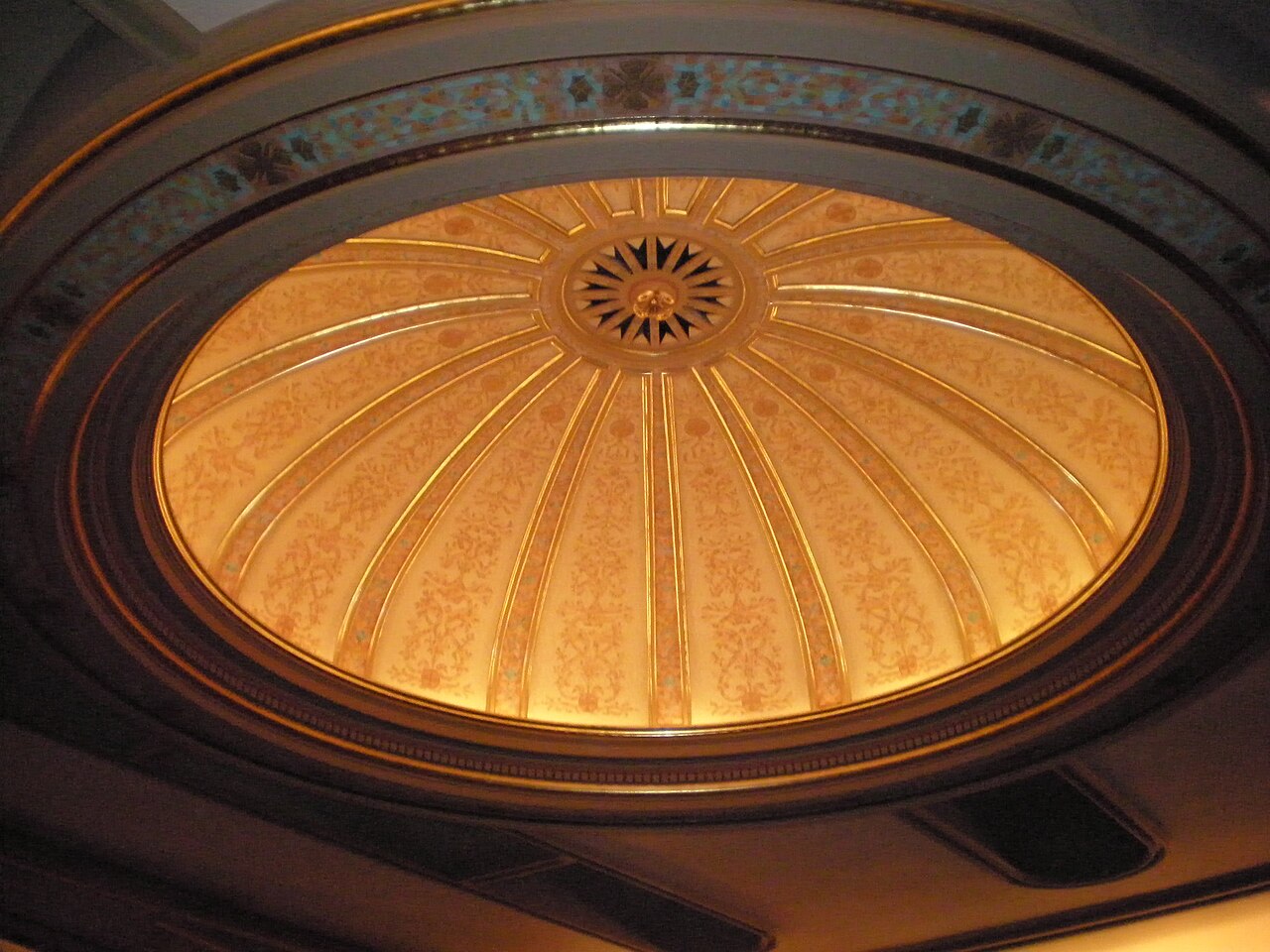
A dome skin seen from below — not this hall's, but the same construction idea.
construction · sound
A riveted metal cupola is not a roof; it is a slow loudspeaker hung upside down over the audience.
The hall on Cardinal Lemoine carries its cupola on a riveted iron frame — the standard of 1889, before welding made joints disappear. Rivets chatter. Anyone who has sat under that cupola during a brass finale knows the faint metallic bloom that follows a fortissimo, a shimmer that is not in the score and not in the speakers. That is the frame answering.
In acoustic terms the cupola does two contradictory things at once. Its shallow dome focuses early reflections onto the central rows — the famous "gold square" hears a show fractionally earlier and measurably brighter than the side aisles. Simultaneously, the iron skin absorbs energy at certain low frequencies where a masonry dome would reflect them, which keeps double basses from turning to soup. Bad cupolas boom; honest ones, like this one, lean slightly dry and let the room's volume of air do the softening.
A dome skin seen from below — not this hall's, but the same construction idea.
Acoustics is only half of what the frame decides. The cupola holds the rigging for the overhead grid — every followspot and effect light hangs from iron that was riveted before the automobile. A metal grid does not creak the way timber does under thermal load, which matters at minute forty of a show when the lamps have warmed the steel. Quiet iron lets the room stay dark when it should be dark; the audience never thinks about it, which is the entire point.
In the nineties, as part of a survey team, I took impulse recordings under that cupola — balloon pops in an empty hall at dawn, the least romantic version of the room there is. The decay curve was shorter than the room's appearance suggested: the iron skin, the plush seating and the crowd of jackets all take their share. A full house shortens it further — a warm, absorbent audience is the cheapest acoustic treatment ever installed.
What stays in memory, though, is not the measurement. It is the way an unamplified voice — the show's one spoken moment, and there is always one — lands on the central rows with a clarity that looks impossible from the rafters. The builders of 1889 could not model a millisecond. They simply built, and the rivets did the rest.
Field note: if you stand centre parterre during the overture and look up, the cupola's rivet lines read like staff paper. I have never managed to un-see it. You may not want to look.
measured notes, not official ones — index · who writes this